
Looking for the Best Transmission Services?
Choose a Specialty Shop. Experience Makes the Difference.
Transmissions are complex systems that require specialized knowledge, advanced diagnostic skills, and years of hands-on experience to properly diagnose, repair, and rebuild.For the best results, choose professionals who specialize in this work rather than relying on a general mechanic or auto repair shop.At AZ Reliable Transmissions, our experienced technicians and builders provide comprehensive services for automatic, manual, CVT, and dual-clutch transmissions, along with transfer cases, differentials, and related drivetrain components. We also build upgraded, heavy-duty, and performance transmissions.Not every problem requires a replacement. The right diagnosis can reveal repair or rebuilding options that save you from paying for an entirely new unit you may not need.
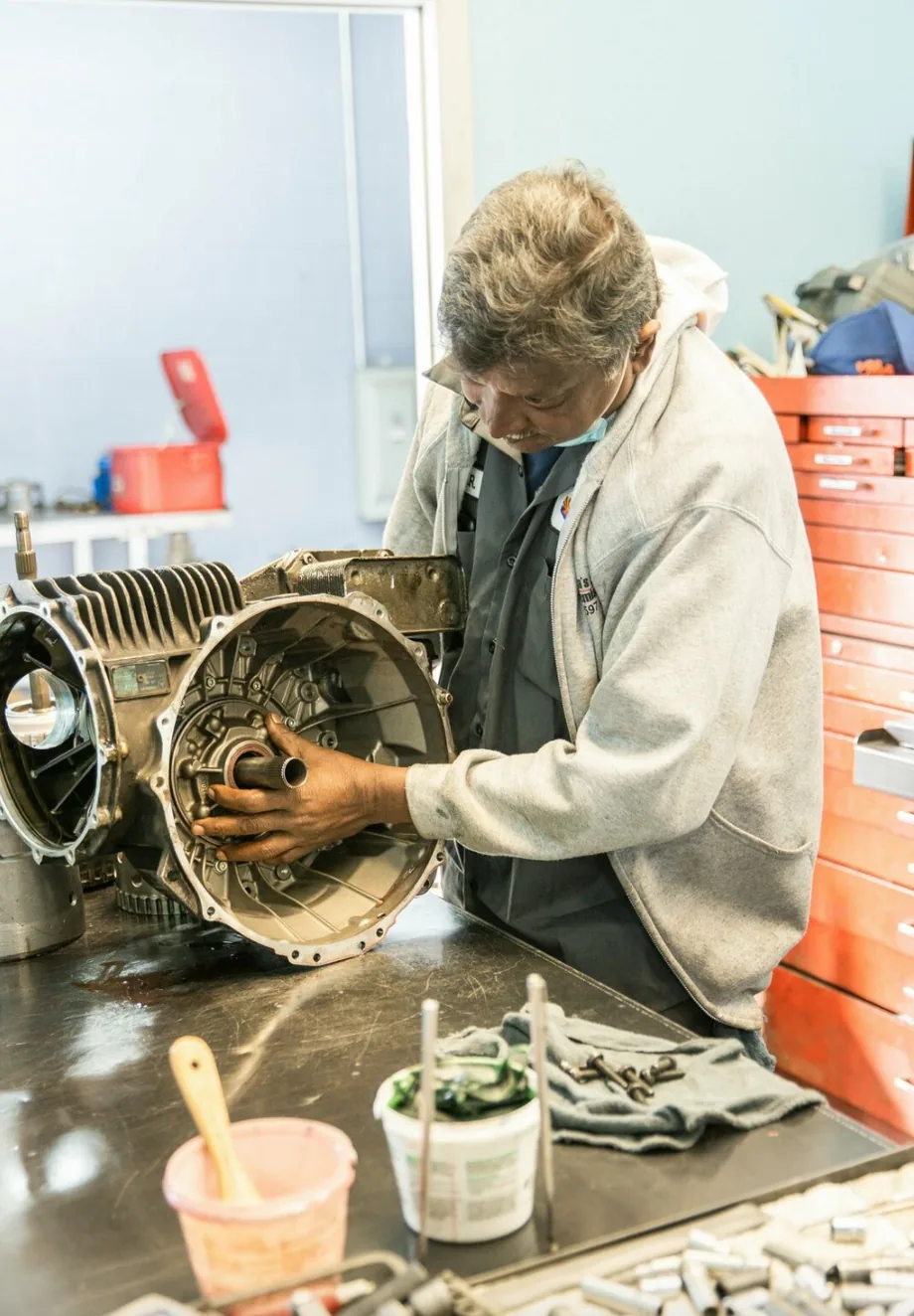
Choose the kind of help your vehicle needs.
From finding the cause to repairing a failure, maintaining your vehicle or planning a stronger build, explore our full transmission and related drivetrain services.
Find the cause of slipping, shifting, noise, warning lights, clutch or 4WD problems.
Explore the appropriate solutions after the problem has been identified.
Don’t wait for it to fail. Keep fluids, levels and related systems in good condition.
Plan for towing, high power, off-road use, bigger tires and demanding driving.
A proper diagnosis can save you from buying the wrong repair.
Slipping, jerking, delayed shifting and a warning light are symptoms—not repair instructions. A specialist considers what the vehicle is doing, what the transmission computer reports, and what can be confirmed before recommending major work.
Identify when the issue happens and whether it can be duplicated safely.
Look at available fault information, fluid condition and accessible leaks.
Discuss findings and whether targeted tests, repair or internal inspection make sense.
Services explained: common problems, options and what the work involves.
Explore the section that matches your goal. Select a vehicle system or topic, then open the practical examples to learn what can cause a problem and which service may be appropriate.
Diagnostics
Before recommending repairs, our specialists investigate transmission, clutch, transfer-case and differential concerns. Similar symptoms can have very different causes.
- Automatic, manual, CVT and DCT transmission diagnostics
- Slipping, delayed engagement, harsh shifting and shuddering
- Clutch operation, grinding gears and hard-to-shift manual transmissions
- Electronic fault codes, sensor signals and control concerns
- Transfer-case engagement, differential noises and driveline vibrations
Free external transmission diagnostics include scan, fluid checks and a road test. Internal disassembly is separate.
Automatic transmission diagnostics
An automatic transmission depends on hydraulic pressure, internal clutches, a torque converter and electronic commands. Similar symptoms can come from very different causes.
A shudder does not automatically mean the converter is bad, and a delayed shift does not always require rebuilding the transmission.
Engine revs rise but the vehicle does not accelerate normally
Possible clutch slip, pressure loss, incorrect fluid level, converter-related problems or control issues. We compare the road-test complaint with available scan data and fluid findings before advising further inspection.
Shudder or vibration while cruising
Torque-converter clutch operation is one possible cause, but driveline vibration or engine performance can produce similar sensations. Vehicle-specific data helps separate those possibilities.
Harsh shifts, delayed Drive or Reverse
We investigate when the symptom occurs and consider fluid, hydraulic pressure, valve-body operation, solenoids, electronics and internal wear. Additional pinpoint tests may be recommended when needed.
Expert note: Trouble-code examples: P0730 can indicate a gear-ratio error; P0741 relates to torque-converter-clutch performance. Neither identifies a single failed part.
Manual transmission & clutch diagnostics
Manual-transmission problems often involve either the gearbox itself or the clutch and its release system. Knowing which one is failing matters.
A worn clutch, release issue and internal synchronizer problem call for different repairs—even when the driver describes all three as “hard to shift.”
Grinding when selecting a gear
Possible synchronizer wear, incomplete clutch release, adjustment or another linkage issue. We consider which gears are affected and whether the symptom changes with engine running.
Engine RPM increases without matching acceleration
A slipping clutch is a possibility, especially under load. The clutch, release system and related components are evaluated before a replacement decision.
Noise when clutch pedal is pressed or released
Release-bearing, pilot-bearing, flywheel and gearbox-related conditions may differ. Symptom timing helps guide the next inspection.
Expert note: The clutch can need replacement even when the manual gearbox itself does not need a rebuild.
CVT transmission diagnostics
Continuously variable transmissions (CVTs) use a different ratio-control design than conventional step-gear automatics. The exact CVT model determines available repairs.
Judder could involve fluid, hydraulic control or internal ratio components. Some CVT repairs are practical; other failures make assembly replacement the better choice.
Judder or shaking during takeoff
Depending on the CVT, diagnostic paths may consider hydraulic control, calibration and belt/chain or pulley-related wear. The vehicle and complaint determine the inspection.
High RPM, hesitation or slipping sensation
We evaluate whether the engine and CVT are delivering the expected response, using vehicle-specific diagnostic information and the appropriate fluid checks.
Whine, heat warning or reduced power
Noise and thermal protection can indicate a range of problems. Continued driving while overheating or losing drive can worsen damage; arrange an evaluation promptly.
Expert note: Some Nissan CVT service bulletins distinguish valve-body repair from internal assembly replacement based on model-specific inspections and codes; those procedures do not apply to every CVT.
Dual-clutch transmission diagnostics
A dual-clutch transmission (DCT) uses clutch systems and electronic or hydraulic control to preselect and shift gears. Wet- and dry-clutch designs require different service approaches.
Clutch wear, actuator or mechatronic faults, software and adaptation problems can overlap. Not every harsh shift means the entire transmission has failed.
Jerking or shudder at low speeds
Possible clutch engagement, calibration, actuator or other drivability concerns. A DCT-specific diagnosis evaluates the behavior rather than treating it like a traditional automatic.
Delayed engagement or transmission warning
Fault-code data, commanded engagement and vehicle-specific tests help distinguish control problems from clutch or internal mechanical conditions.
Problems after clutch or control-unit replacement
Some vehicles need a defined clutch adaptation or basic-settings procedure following qualifying work. This is not a universal reset for every DCT.
Expert note: A dual-clutch unit may need clutch replacement, mechatronic repair or further internal work—not automatically a complete replacement.
Transfer-case & differential diagnostics
A noise or vibration that feels like a transmission problem may instead originate in a transfer case, differential, driveshaft, axle or mounting component.
Identifying the actual unit avoids unnecessary transmission work and helps narrow repair, rebuild or replacement decisions.
4WD will not engage or disengage
Depending on the vehicle, we evaluate transfer-case operation and related engagement controls. An actuator or control issue differs from damage inside the transfer case.
Whine or growl that changes with speed or load
Differential bearings, gear wear, axle bearings and other drivetrain components may generate similar noises. The source and operating conditions matter.
Clunk or vibration on acceleration
Driveshaft joints, CV axles, center support bearings and mounts can create drivetrain movement or noise. An inspection helps isolate the cause.
Expert note: Related differential and transfer-case diagnostics are available; the always-free offer specifically covers external transmission diagnostics.
Repair, Rebuild or Replace
Once the source of the trouble is identified, we explain repair, rebuild or replacement possibilities. The unit’s design, damage, parts availability and overall condition all affect the choice.
- Targeted transmission, valve-body, solenoid and torque-converter repairs
- Internal transmission repairs and complete rebuilds
- Replacement when the case or other damage makes rebuilding impractical
- Automatic, manual, CVT and DCT options, depending on serviceability
- Transfer cases, differentials, clutches, driveshafts, seals and mounts
Some components are replaced rather than rebuilt; some units can be rebuilt when an isolated replacement part will not solve the problem.
A serviceable solenoid, valve-body issue, seal, clutch or other component may be repairable without rebuilding the full unit.
When internal damage is widespread but the unit is rebuildable, disassembly, inspection and replacement of affected parts may be appropriate.
Severe case damage, unavailable parts, nonserviceable designs or repair economics may favor a compatible replacement assembly.
Automatic transmission: repair vs. rebuild vs. replace
A conventional automatic may be repairable as a complete unit or through work on an individual component; the correct path depends on diagnosis and what inspection reveals.
Rebuilding is not automatically better than repair, and replacement is not automatically better than rebuilding.
When a repair may be enough
A confirmed serviceable valve-body or solenoid problem, an accessible leak or another isolated failure may be addressed without rebuilding the entire unit, if further internal damage is not present.
When a rebuild may make sense
Extensive clutch wear, damaged internal components or debris affecting several areas may call for a full teardown and rebuild, assuming the case and major components are serviceable.
When replacement may be more practical
A cracked or severely damaged housing, widespread damage, limited parts availability or unfavorable repair economics can make replacement preferable. The final choice depends on the vehicle and suitable unit options.
Expert note: When replacement is appropriate, we compare compatible unit options, expected condition, cost and the applicable warranty for that vehicle.
Manual gearboxes, clutches & flywheels
The clutch, flywheel and manual gearbox are related but separate systems. The repair plan should distinguish external clutch work from internal transmission damage.
Replacing a slipping clutch may restore drive without rebuilding an otherwise healthy manual transmission.
Clutch replacement rather than gearbox rebuild
A worn clutch disc or pressure plate may require component replacement while the gears, shafts and synchronizers remain serviceable.
Manual transmission repair or rebuild
Damaged synchronizers, bearings, shift components or internal gears may require gearbox repair or rebuilding after inspection.
Replacement when the case or core is unusable
A badly damaged housing, extensive internal failure or unavailable parts can make gearbox replacement the better approach. Flywheels are inspected and serviced or replaced when appropriate.
Expert note: A clutch usually gets replaced as an assembly or set; that is not the same service as rebuilding the transmission.
CVT repair & replacement decisions
CVTs differ significantly among manufacturers. Some repairs target external controls or hydraulic components; other problems affect internal ratio components.
An accurate model-specific assessment prevents a one-size-fits-all rebuild or replacement recommendation.
Serviceable control problem
For supported CVTs, a valve-body or related control repair may be an option when internal components remain in acceptable condition.
Internal wear or ratio-component failure
Belt/chain, pulley or other internal damage may require specialized internal work or a replacement assembly depending on the exact design and repairability.
When replacement is the better option
Some CVT designs, available parts and extent of damage make assembly replacement more appropriate than rebuilding. We discuss supported options rather than promising every CVT can be rebuilt.
Expert note: CVT repair scope and replacement availability vary by make, model and transmission design.
DCT clutch, control & internal transmission work
Dual-clutch systems combine mechanical gear sets with clutch engagement and sophisticated control. Their repair plans depend on whether the problem is at the clutch, control unit or geartrain.
A clutch or actuator fault may be addressed differently than a major internal gearbox failure.
Targeted clutch or mechatronic work
If inspection identifies a supported replaceable clutch, actuator or control component, a targeted repair may be more appropriate than replacing the full gearbox.
Internal repair or rebuild
Where supported by the unit design and parts availability, internal repairs can address mechanical damage. Some assemblies have limited rebuild options.
Replacement and post-repair setup
Severe damage or a nonserviceable unit may call for replacement, followed by model-specific coding, adaptations or clutch calibration if required.
Expert note: Do not assume all dual-clutch transmissions use the same clutches, fluid or programming procedure.
Transfer cases & differentials: repair, rebuild or replace
Related drivetrain units can also receive targeted repairs, complete rebuilding or replacement, depending on mechanical damage and parts availability.
An external seal or bearing problem is not the same job as broken internal gears or a damaged case.
Targeted drivetrain repairs
Some leak, bearing or engagement problems can be addressed without rebuilding the complete unit when the remaining internals are sound.
Differential or transfer-case rebuild
A rebuild may be appropriate for internal bearings, gears or related components when the case remains serviceable and compatible parts are available.
Replacement instead of rebuilding
Major housing damage, extensive wear or unavailable internal parts can favor replacing the differential or transfer-case assembly.
Expert note: Many mounts, axle seals, U-joints and CV axle assemblies are normally replaced as parts rather than rebuilt in a transmission repair.
Preventative Care & Maintenance
Don’t wait until something breaks. Maintain your transmission and related drivetrain systems with the correct fluid, service procedure and attention to early warning signs.
- Transmission Fluid & Filter Service and drain-and-fill where appropriate
- CVT Fluid Service and DCT Fluid & Filter Service
- Differential Fluid Service and Transfer Case Fluid Service
- Pan inspection and filter replacement only when applicable
- Towing, operating heat and demanding use considerations
Good maintenance supports longevity; it cannot reverse existing damage or guarantee a transmission will never fail.
Routine fluid service for automatic and manual transmissions
Fluid supports lubrication, cooling and appropriate operation. The correct product, level procedure and service interval depend on the transmission and vehicle.
Fluid service can help protect a working transmission; it does not reverse worn clutches, damaged gears or an existing internal failure.
Drain-and-fill or pan-drop service?
A drain-and-fill replaces the amount of fluid removed. A pan-drop, where possible, allows pan cleaning and inspection and filter service if that filter is replaceable.
Is there always a transmission filter to replace?
No. Some units have serviceable filters, while others have internal or integrated filtration that is not routinely replaced. The procedure is selected for the specific unit.
My transmission already slips—will a fluid change fix it?
Not automatically. Slipping calls for diagnosis first. Fluid condition may be relevant, but internal wear, hydraulic problems or electronic controls can also be involved.
Expert note: AZ Reliable does not perform machine transmission flushes. Maintenance intervals and fluid specifications are vehicle-specific.
CVT transmission fluid maintenance
Many CVTs control speed ratio through pulley-and-belt or chain systems and sensitive hydraulic controls. The correct CVT fluid and fill procedure are essential.
Using the wrong fluid or improper level can change hydraulic behavior and accelerate damage.
Does every CVT use the same fluid?
No. Different CVT designs call for specific fluids and service procedures. The vehicle and transmission identification control the choice.
Can CVT fluid service prevent every failure?
No. Maintenance may reduce avoidable wear where recommended, but it cannot guarantee prevention of belt, pulley, bearing or hydraulic failures.
What if a CVT whines or hesitates?
A noise or hesitation calls for evaluation rather than assuming a fluid change will resolve it. The cause may be hydraulic, electronic or mechanical.
Expert note: CVT repairability varies significantly by model and availability of suitable components.
Dual-clutch fluid and filter service
DCTs have two clutches, and maintenance requirements differ between dry-clutch and wet-clutch designs. Some need dedicated transmission fluid and filter service.
The wrong procedure or fluid can affect clutch control, lubrication and the transmission’s hydraulic system.
Wet-clutch versus dry-clutch DCT
Wet-clutch systems typically rely on specified oil for clutch cooling and hydraulic functions. Dry-clutch designs have different service requirements; neither should be treated as a conventional automatic.
Do all DCTs need the same filter replacement?
No. Filter design and replacement schedule depend on the specific transmission, if a serviceable filter exists.
Does jerking automatically mean it needs new fluid?
No. Jerking can involve clutch wear, adaptations, hydraulic control or other faults. It should be diagnosed before a repair recommendation.
Expert note: Clutch adaptations or electronic setup may also be needed after qualifying DCT repair work, depending on the model.
Differential and transfer-case fluid service
Front and rear differentials and transfer cases use specified lubricants to protect gears, bearings and related internal components. Some have distinct capacities and filling steps.
Neglected or incorrect fluid may increase wear, especially when these assemblies see frequent towing, off-road use or high load.
Can differential oil be the same as transfer-case fluid?
Not necessarily. These are different assemblies and may require different fluid specifications. The service follows the vehicle requirements.
Will fresh fluid eliminate a howling differential?
Not if the noise comes from already worn bearings or damaged gears. We first identify the cause.
What about 4WD engagement issues?
Fluid condition is one factor, but engagement problems can also involve mechanical or control components. Diagnosis comes first.
Expert note: Fluid service is not a substitute for repairing damaged gears, bearings, seals or engagement mechanisms.
Maintenance for towing, Arizona heat and demanding driving
Repeated towing, stop-and-go driving and high-load use can increase operating temperature. Maintenance planning should consider the application and the manufacturer’s guidance.
Excess heat can shorten fluid life; preventing a serviceable issue from becoming severe is often less expensive than addressing resulting damage.
Does Arizona heat affect transmission service?
Ambient heat can increase the cooling burden, but service timing should reflect the vehicle, temperatures, use and manufacturer’s maintenance guidance.
My truck tows a trailer—should fluid be checked?
Towing places additional demands on powertrain components. Correct fluid level and condition, proper cooling and the appropriate service interval matter.
Will an overheated transmission need rebuilding?
Not always. The outcome depends on how severe the overheating was, whether the fluid and internal components were damaged and what diagnostic checks reveal.
Expert note: An overheating warning should be taken seriously. Follow the vehicle manufacturer’s guidance and arrange an inspection if symptoms persist.
Upgrades & Specialty Builds
Explore upgrades that can improve transmission capability, durability and performance in the right application—whether you tow, race, drive off-road or have modified your vehicle.
- Performance Transmission Builds
- Heavy-Duty Transmission Builds
- Custom Transmission Builds
- Classic and specialty applications as appropriate
- Upgraded components selected for the actual transmission and vehicle
Wheel, tire, suspension and engine modifications change the demands on the vehicle; transmission build choices must match those demands.
Heavy-duty transmission builds for work trucks and towing
Trucks used for hauling and towing may need transmission components selected for sustained load and durability, within the limitations of the vehicle and its driveline.
A build for demanding use should reflect actual vehicle weight, operating conditions, power output and the transmission’s weak points.
High-mileage diesel pickup that tows frequently
Review transmission condition, failure history, intended load and model-specific upgrade options when a rebuild is needed.
A larger trailer puts more load on the truck
Consider how the vehicle is used and whether maintenance, cooling-system evaluation or a suitable upgraded build is appropriate. A transmission build does not increase the vehicle manufacturer’s rated towing capacity.
Repeated heat-related problems
Identify why temperatures rise before choosing rebuild parts or other modifications; cooling and calibration need consideration.
Expert note: Turbo-diesel upgrades can increase torque demand, so build choices must match the application.
Performance builds for modified and higher-output vehicles
Higher power, aggressive launches and track use can increase demands on friction elements, hydraulic control and rotating components.
A build may target suitable parts and calibrations, but the best approach differs for every transmission model and power level.
Vehicle has added boost or engine modifications
Additional engine torque can change transmission load. Component upgrades should reflect the vehicle’s output, intended use and available transmission options.
Hard shifts or drag-strip launches
Repeated high-load shifts and launches stress certain components. The build and calibration must be evaluated as a system.
Will a performance build guarantee a power rating?
Power handling depends on the specific transmission, selected components, vehicle use and operating conditions. Discuss build goals rather than relying on a blanket power rating.
Expert note: We recommend component choices based on the actual vehicle, measured needs and agreed build goals.
Transmission and drivetrain planning for off-road vehicles
Larger tires, changed axle gearing, off-road loads and steep grades can alter effective gearing and the demands on the transmission and drivetrain.
Transmission upgrades may help a suitable vehicle handle intended use, but some concerns are better addressed by gearing, cooling or other drivetrain work.
Installing larger wheels and tires
Changes in overall tire diameter can alter operating load and gearing; transmission and differential suitability should be considered before specifying upgrades.
Rock crawling, sand or long low-speed climbs
Higher load at low speed can contribute to heat. Cooling, fluid condition, gearing and unit condition need evaluation.
4WD vehicle with axle or transfer-case concerns
Differentiate a transmission problem from transfer-case, driveshaft and differential issues before choosing the work.
Expert note: Changes in tire size, gearing and vehicle setup should be considered when choosing suitable transmission and drivetrain upgrades.
Classic-car and specialty transmission configurations
Older vehicles and custom applications can involve different parts availability, gear ratios, linkage and vehicle-specific considerations.
The right plan respects the drivetrain and intended use rather than assuming modern parts fit every classic or custom vehicle.
Restoring a classic car
Older automatic or manual units may be repaired or rebuilt based on condition, design and parts availability.
Custom drivetrain combination
The transmission, engine, driveshaft, mounting, controls and vehicle application may require coordinated planning. Scope depends on what is feasible for the specific project.
Daily-driving a classic in Arizona
Reliability, intended driving conditions and available maintenance or component improvements should shape the work.
Expert note: Custom Transmission Builds, Classic Car Transmission Repair and related services are evaluated case by case.
Building with durability and operating conditions in mind
Extreme ambient heat, traffic, towing and power modifications can affect the operating demands on a transmission and its fluid.
Durability comes from correct diagnosis, suitable parts where available, correct setup and realistic operating expectations.
Do upgraded parts make every transmission last longer?
Not automatically. A change that helps one application may be unnecessary or inappropriate for another.
Can a larger cooler solve repeated failures?
Cooling adequacy may matter, but temperature concerns also warrant checking driving load, hydraulic control and underlying mechanical problems before choosing modifications.
Does a rebuild always need new programming?
No. Programming or relearning needs depend on the transmission, modules, replaced components and manufacturer procedure.
Expert note: Our focus is an appropriate build for your vehicle and the way you plan to use it.
Start with our always-free external transmission diagnostic evaluation at the Chandler shop.
Find the service you’re looking for.
Select a service below for details. Not sure which applies? Call the shop and describe the symptoms—we can help you start with the appropriate evaluation.
Diagnostics
Transmission Diagnostics
Complete transmission diagnostics for shifting problems, slipping, delayed engagement, warning lights, noises, leaks and other transmission concerns. We diagnose mechanical, hydraulic and electronic transmission problems to determine the cause before recommending repairs.
Repair, Rebuild or Replace
Transmission Repair
Professional transmission repair for automatic, manual, CVT and DCT transmissions. We diagnose and repair internal, hydraulic, mechanical and electronic transmission problems when repair is appropriate.
Transmission Rebuild
Complete transmission rebuilding performed by transmission specialists. The transmission is disassembled and inspected so worn or damaged components can be identified and replaced before reassembly and testing.
Transmission Replacement
Transmission replacement when repair or rebuilding is not the best option. We diagnose the vehicle first and help determine the appropriate replacement solution for the transmission and application.
Automatic Transmission Repair
Diagnosis, repair and rebuilding of automatic transmissions for cars, trucks and SUVs. We service internal components, hydraulic systems, valve bodies, torque converters, solenoids and electronic controls.
Manual Transmission Repair
Diagnosis, repair and rebuilding of manual and standard transmissions, including internal gears, bearings, synchronizers, shift components and related clutch and flywheel systems.
CVT Transmission Repair
CVT transmission diagnostics, service and repair for vehicles equipped with continuously variable transmissions. We diagnose mechanical, hydraulic and electronic CVT problems before recommending repair or replacement.
DCT / Dual-Clutch Transmission Repair
Diagnosis, service and repair of dual-clutch transmissions (DCT), including clutch, hydraulic, electronic and internal transmission concerns.
Classic Car Transmission Repair
Transmission diagnosis, repair and rebuilding for classic, vintage and specialty vehicles, including older automatic and manual transmission applications.
Valve Body Repair
Transmission valve body diagnosis and repair for problems such as harsh shifting, delayed engagement, incorrect gear changes, hydraulic pressure issues and transmission fault codes.
Torque Converter Repair & Replacement
Diagnosis and replacement of torque converters causing shuddering, slipping, overheating, noise or transmission engagement problems.
Transmission Leak Repair
Diagnosis and repair of transmission fluid leaks from pans, gaskets, seals, lines and related transmission components. We locate the source of the leak before recommending repairs.
Transmission Solenoid Repair
Diagnosis and replacement of shift solenoids, pressure-control solenoids and related electronic transmission controls.
Transmission Programming
Programming and electronic setup for compatible automatic, CVT and DCT transmissions following transmission repair, replacement or related electronic service.
TCM Programming & Reprogramming
Programming and reprogramming of compatible Transmission Control Modules (TCMs) following module replacement, transmission replacement or repairs requiring updated module configuration.
Transmission Relearn & Adaptation
Transmission relearn and adaptation procedures to reset or establish shift values and transmission operating parameters following qualifying repairs, service or component replacement.
Clutch Repair
Diagnosis and repair of manual transmission clutch problems including slipping, chatter, difficult engagement, noise and other clutch-related concerns.
Clutch Replacement
Complete clutch replacement for manual transmission vehicles, including inspection of related clutch, release and flywheel components to identify additional wear or damage.
Flywheel Repair & Replacement
Flywheel inspection, service and replacement for manual transmission and clutch systems when wear, heat damage or other conditions affect proper clutch operation.
Transmission Mount Replacement
Diagnosis and replacement of worn or broken transmission mounts that may cause vibration, clunking or excessive drivetrain movement.
Differential Repair
Diagnosis and repair of front and rear differential problems including noise, vibration, leaks, bearing wear, gear damage and other differential concerns.
Differential Rebuild
Complete differential rebuilding for worn or damaged differentials, including inspection and replacement of failed internal bearings, gears and related components as needed.
Transfer Case Repair
Diagnosis and repair of transfer case problems in four-wheel-drive and all-wheel-drive vehicles, including noise, leaks, engagement problems and internal mechanical failures.
Transfer Case Rebuild
Transfer case rebuilding for units with internal wear or damage, including disassembly, inspection and replacement of failed or worn components as needed.
Driveshaft Repair
Diagnosis and repair of driveshaft and driveline problems causing vibration, noise, clunking or other power-delivery concerns.
U-Joint Replacement
Diagnosis and replacement of worn or failed universal joints that can cause driveline vibration, clunking, noise or excessive driveshaft movement.
Rear Main Seal Replacement
Diagnosis and replacement of leaking rear main crankshaft seals. Rear main seal service may require transmission removal to access the seal between the engine and transmission.
CV Axle Repair & Replacement
Diagnosis and replacement of worn or damaged CV axles and CV joints that can cause clicking, vibration, clunking or other drivetrain symptoms.
Axle Bearing Replacement
Diagnosis and replacement of worn or damaged axle bearings that can cause humming, grinding, vibration, excessive play or other drivetrain concerns.
Center Support / Carrier Bearing Replacement
Diagnosis and replacement of worn driveshaft center support or carrier bearings that can cause vibration, clunking, noise or excessive driveshaft movement.
Motor Mount Replacement
Diagnosis and replacement of worn or broken engine/motor mounts that can cause excessive engine movement, vibration, clunking or drivetrain movement.
Axle Seal Replacement
Diagnosis and replacement of leaking or damaged axle seals that can cause differential or transmission fluid leaks around the axle or CV axle. We inspect the surrounding axle, bearing and sealing surfaces for related wear or damage.
Preventative Care & Maintenance
Transmission Fluid & Filter Service
Transmission maintenance using a pan-drop service where applicable, including fluid replacement, transmission filter replacement when serviceable, pan cleaning and inspection. We do not use a transmission flush machine.
CVT Fluid Service
CVT transmission fluid maintenance using the correct fluid and service procedure for the transmission. Proper CVT maintenance can help protect transmission operation and service life.
DCT Fluid & Filter Service
Dual-clutch transmission fluid and filter service where applicable using the correct fluid and maintenance procedure for the DCT system.
Differential Fluid Service
Front and rear differential fluid service using the appropriate gear oil and service procedure for the vehicle and differential.
Transfer Case Fluid Service
Transfer case fluid maintenance using the proper fluid and service procedure for the vehicle’s four-wheel-drive or all-wheel-drive system.
Upgrades & Specialty Builds
Performance Transmission Builds
Performance transmission builds for modified and high-performance vehicles. Builds can be configured with upgraded components based on vehicle use, power level and performance requirements.
Heavy-Duty Transmission Builds
Heavy-duty transmission builds for trucks, towing, work vehicles and demanding applications requiring increased durability beyond a standard transmission rebuild.
Custom Transmission Builds
Custom transmission builds configured around the vehicle, application and intended use, with available upgraded components and modifications based on performance and durability requirements.
Helpful benefits from the first phone call to the completed job.
Call our shop to talk through diagnostics, towing, financing and warranty coverage. These offers can make the process easier when a major repair is needed.
FREE External Transmission Diagnostics
Vehicle scan, fluid checks and a road test. Internal transmission removal or teardown is a separate procedure.
FREE Towing With Any Major Repair
Available from the communities served by our Chandler shop with any major repair.
Bad Credit? No Credit?
Ask about financing options, including advertised $0 down and 0% interest plans. Financing details.
Up to 5 Years / 50,000 Miles
Applicable parts-and-labor shop warranty. We accept all third-party vehicle-service warranty providers and help with claims.
Financing options, terms and eligibility depend on the available plans. Shop warranty terms vary by repair; third-party warranty claims require approval by the warranty company.
Have a transmission problem? Talk with the people who repair and rebuild them.
All repair work takes place at our Chandler shop. We’re here for routine transmission care, complex internal repairs, electronic problems and related drivetrain work.
6615 W Chandler Blvd, Suite 2 · Chandler, AZ 85226
All repairs performed at our Chandler location.